How to Tell a Pony Car From a Muscle Car (Without Starting a Garage Argument)
Walk into any cars and coffee meet, point at a 1970 Challenger, and call it a muscle car. Then watch what happens. Someone will correct you. Someone else will correct that person. Pretty soon you’re three espressos deep in a debate about engine displacement, wheelbase length, and what Dennis Shattuck wrote in Car Life magazine back in 1964. The truth is, pony cars and muscle cars share a lot of DNA, but they were built with different missions in mind.
- Pony cars are compact, affordable, sporty coupes built around long hood and short deck styling, kicked off by the 1964 Ford Mustang.
- Muscle cars are mid-size two-door coupes engineered around a big-block V8 and straight-line speed.
- Modern Mustangs, Camaros, and Challengers blur the line so much that intent often matters more than the label.
Where the Pony Car Came From
A pony car is an American classification for affordable, compact, sporty coupes or convertibles with a performance-oriented image. The common traits include rear-wheel drive, a long hood, a short deck, bucket seats, room for four, a wide options list, and lots of mass-produced parts shared with cheaper models in the lineup.
The class was practically invented overnight. Ford forecasted 100,000 first-year Mustang sales, then watched dealers write 22,000 orders on day one. Production had to ramp up immediately, and the extended model year ended with 618,812 Mustangs sold. Car Life magazine editor Dennis Shattuck coined the term “pony car” to describe the new breed.
The funny part? The Mustang wasn’t actually first. The Plymouth Barracuda hit showrooms on April 1, 1964, two weeks before the Mustang. But marketing wins races, and the Mustang stole the spotlight so completely that the entire segment took its name from a horse.
What Actually Makes a Muscle Car
Muscle cars have a fuzzier origin story. There was no single model that kicked off the muscle car wars, but the recipe is simple. Drop a huge V8 into a two-door coupe and tune the whole thing for straight-line speed. Raw power, a lack of sophistication, and that distinctly American swagger are the hallmarks of all the great ones.
The faux-racing 1964 Pontiac GTO is widely credited as the first true muscle car, though the 1949 Oldsmobile Rocket 88 has a strong claim as the original. Other recognized names include the Dodge Charger, Plymouth Road Runner, and Chevrolet Chevelle. Notice the pattern? These are mid-size cars stretched around enormous engines, not stylish compacts dressed up to look fast.
The Real Differences in One Garage Visit
Park a ’69 Mustang next to a ’69 Chevelle SS and the contrast jumps out. Muscle cars were longer, wider, heavier, and built for brute-force power. Pony cars were smaller, lighter, and better balanced. Muscle cars rode on midsize platforms with aggressive lines and engines suited for the quarter mile. Pony cars sat on compact but sporty chassis and turned tighter than their muscle-bound cousins.
Engines tell another part of the story. A pony car might have a turbo four, V6, or V8, while a muscle car always came with a V8, and usually a big block at that. To qualify as a real muscle car, a vehicle needed to be a mid to full-size body with that big V8 under the hood. Pony cars allowed more variety, and that variety was the whole point. A buyer in 1966 could order a six-cylinder Mustang for commuting or a 289 V8 for weekend stoplight wars, and either way they got the same long-hood styling.
Why Modern Cars Muddle Everything
Today the categories collapse into each other. The Mustang, once the OG pony, easily makes muscle-car power in GT and Shelby trims. The Camaro ZL1 isn’t pony anything, and apparently it looks so good that it’s 39 times as likely to be stolen as the average car. Even the Challenger straddles categories depending on trim, mixing pony heritage with full-blown muscle car attitude.
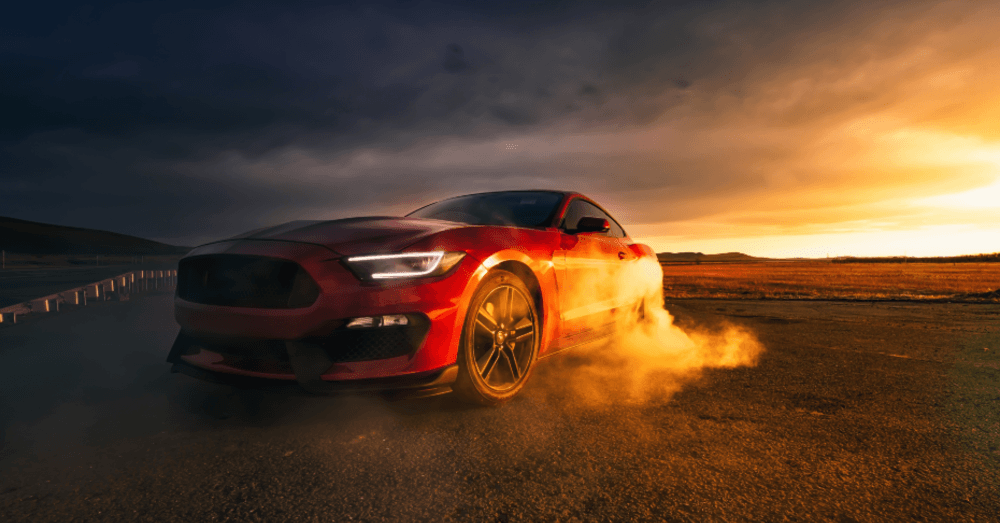
The Mustang remains the iconic pony car by birthright, but a Shelby GT500 with 760 horsepower laughs at any attempt to call it “compact” anything. Modern Mustangs and Camaros are still technically pony cars, but a focus on suspension, handling, and Nurburgring lap times has muddled the terms we use. The super-sporty GT350 and Camaro ZL1 are track monsters and bonafide sports cars in their own right.
Settling the Debate at Your Next Cars and Coffee
Use this rough rule and you’ll sound like you know what you’re talking about. If it’s a compact-ish coupe with long-hood and short-deck proportions and offers engines from sensible to silly, it’s a pony car. If it’s a mid-size body wrapped around a thumping V8 with no apologies for handling, it’s a muscle car. Charger? Muscle. Challenger? Pony with muscle leanings. GTO? Muscle, full stop. Mustang and Camaro? Pony cars at heart, even when their top trims punch well above their weight class. The labels matter to enthusiasts, but the joy of driving either one is the same.
This post may contain affiliate links. Meaning a commission is given should you decide to make a purchase through these links, at no cost to you. All products shown are researched and tested to give an accurate review for you.