How Escaped Farm Pigs Bred With Wild Boar and Rewrote Genetics in Fukushima’s Ghost Towns
After the 2011 Fukushima nuclear disaster forced 160,000 people to flee their homes, the abandoned evacuation zone became the setting for a strange biological turn. Domestic pigs, left behind on farms, escaped their pens and wandered into the surrounding forests. There, they met the native wild boar population and started breeding. Now, a new genetic study is showing researchers exactly what happened next, and the results have caught scientists off guard.
- The research shows that domestic pig maternal lineages sped up generational turnover, rapidly diluting pig genes.
- Hybrids from pig mothers had already passed through five or more generations since the original crossbreeding, showing unusually fast genetic change.
- The findings point to a mechanism likely at work wherever feral pigs and wild boar interbreed around the world.
A Nuclear Disaster Creates an Unplanned Experiment
In 2011, a 9.0 magnitude undersea earthquake in the Pacific Ocean rocked Japan. The earthquake and resulting tsunami decimated the Fukushima Daiichi nuclear plant along the coast. An estimated 164,000 residents in the surrounding area were forced to evacuate within hours, with potentially thousands still displaced today. In the rush, people left behind pets and livestock, including farm pigs.
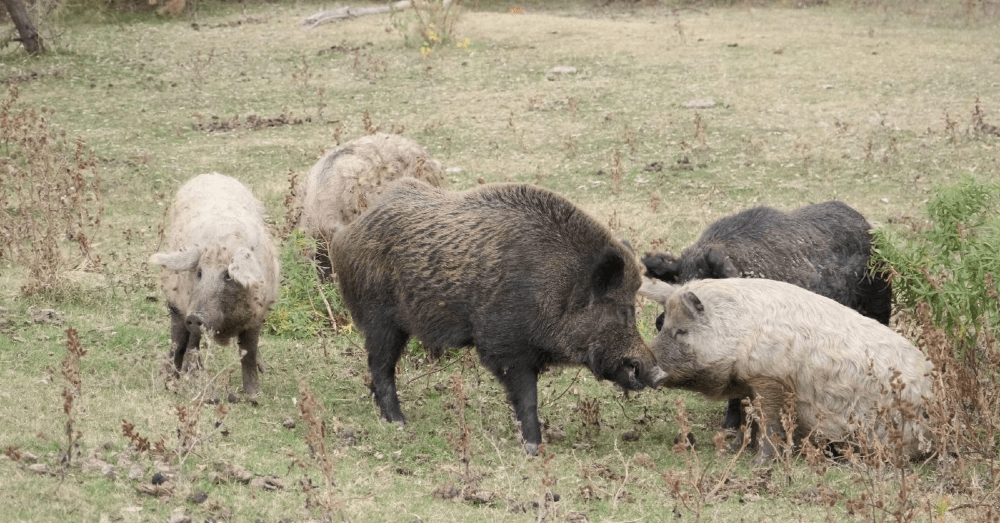
Following the evacuation, domestic pigs escaped into abandoned farmland and forests, where they interbred with wild boar. With no repeated introductions and minimal human activity, the region became a rare natural experiment in hybridization. Because people weren’t continually bringing in new farm animals, the Fukushima nuclear powerplant disaster site created a clean testing ground for scientists. There was one single wave of domestic pig DNA entering the wild population, and nothing after that.
How Scientists Tracked the Genetic Changes
A team led by Shingo Kaneko of Fukushima University and Donovan Anderson of Hirosaki University analyzed mitochondrial DNA and nuclear genetic markers from 191 wild boar and 10 domestic pigs collected between 2015 and 2018. The study was published online in the Journal of Forest Research on January 22, 2026.
Mitochondrial DNA passes only through mothers, allowing scientists to trace maternal ancestry. Nuclear DNA reflects the broader mix inherited from both parents. By comparing these two types of genetic data, the researchers could figure out which hybrids had pig mothers versus boar mothers, and they could estimate how many generations had passed since the first crossbreeding event.
In earlier tests, contaminated wild boars in the area showed levels of cesium-137 at over 300 times higher than the safe limit. This is a highly radioactive isotope produced by nuclear reactors. Yet despite the radiation, these animals were thriving.
The Surprising Role of Pig Mothers
You might expect that pig genes would linger in the wild boar population for a long time. After all, farm pigs breed year-round and produce big litters. Wild boar are more conservative, typically breeding once a year. That difference alone could change the math on how fast hybrid populations grow.
Rather than prolonging the genetic influence of domestic pigs, maternal pig lineages actually accelerated genetic turnover in wild boar populations. Think of it this way: because pig mothers passed on that fast breeding cycle to their hybrid offspring, those hybrids cranked through generations at a much faster rate. Their descendants constantly backcrossed with the much larger population of pure wild boars. Each time that happened, the pig DNA got a little thinner.
Wild boar carrying domestic pig mitochondrial DNA had lower proportions of pig-derived nuclear genes than hybrids with wild boar maternal lineages. That’s a genuine surprise. Many individuals with pig maternal lineages were already over five generations removed from the original cross, indicating unusually fast genetic turnover.
In plain terms, the hybrids with pig moms were breeding so quickly that they kept mixing with wild boar and lost their domestic pig traits faster than expected. The very trait that might have been expected to preserve pig genetics instead sped up their disappearance.
Why This Matters Beyond Fukushima
Feral pigs are already a major problem in parts of the United States, Australia, Europe, and across Asia. They destroy crops, spread disease, and disrupt local wildlife. Understanding how Fukushima pig-boar hybrids shed their domestic genes gives researchers a new way to think about feral pig management everywhere.
The researchers say the findings could apply broadly wherever feral pigs and wild boar interbreed, a growing issue in parts of Europe, North America, and Asia. By tracking maternal lineages, authorities can now predict which hybrid populations are about to grow rapidly in number.
The sudden absence of human activity created conditions that allowed wild boar populations to expand rapidly. While Fukushima’s conditions were extreme and specific to that disaster, the underlying biology isn’t. The same reproductive patterns exist anywhere domestic pigs go feral. Uncontrolled hybridization can disrupt evolutionary processes, inflate populations quickly, and damage ecosystems.
What Fukushima’s Hybrid Boar Can Teach Us About Wildlife
This study flips a common assumption on its head. Scientists expected domestic pig DNA to stick around and reshape wild boar populations for a long time. Instead, nature found a way to wash it out, and it did so faster because of the very breeding advantage that farm pigs carry. Over a decade after the disaster, Fukushima’s hybrid boar remain a living experiment in evolution under human disruption. Their genetics tell a story of how quickly life adapts when the rules suddenly change.
For wildlife managers around the world, the takeaway is practical: pay attention to which animals are the mothers in a hybrid population. That maternal lineage can change how fast a population grows and how quickly it sheds its domestic traits. It’s a tool that could make a real difference when dealing with the millions of feral pigs causing damage across multiple continents right now.
This post may contain affiliate links. Meaning a commission is given should you decide to make a purchase through these links, at no cost to you. All products shown are researched and tested to give an accurate review for you.