
Looking for a used car that’s only a few years old and doesn’t have a mountain of miles on it? Cars finishing a lease often tick those boxes. They deserve a spot on your shortlist, but there are a few things to look at closely before any money changes hands.
- Lease contracts cap yearly miles and charge for extra wear, so many off-lease cars come back with moderate mileage.
- More leased vehicles are expected to reach the used market in the second half of 2026, giving shoppers a wider pool of recent models to consider.
- A history report, service records, and an independent inspection are still your best protection.
Why Lease Contracts Tend to Produce Lower-Mileage Cars
Most leases allow 12,000 to 15,000 miles per year, and drivers who go past that limit pay excess mileage charges. On a three-year lease, a car driven within its cap lands around 36,000 to 45,000 miles, a sweet spot for a used buyer.
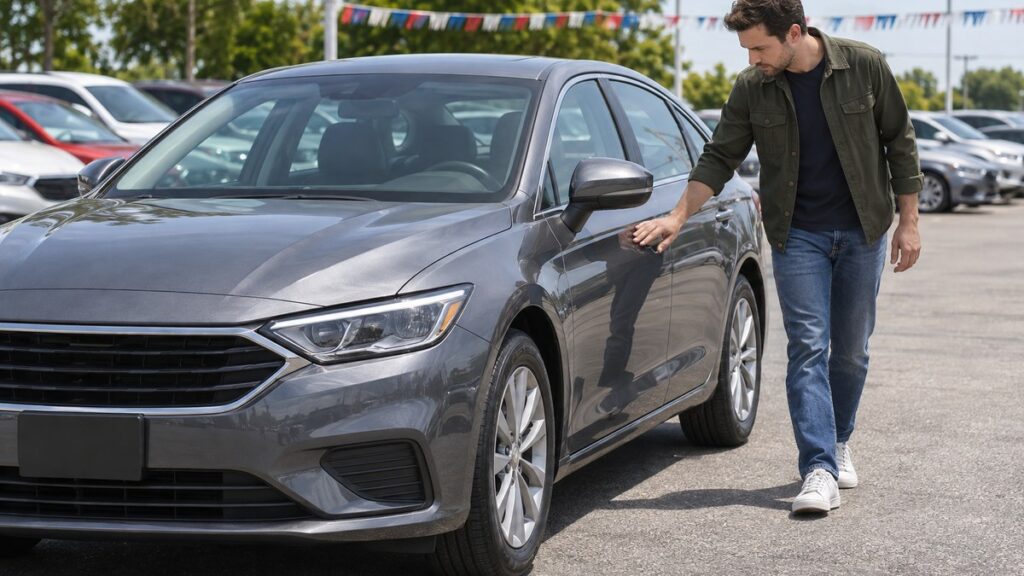
Wear-and-tear charges also give drivers a reason to treat the car with care, though some simply pay the fee and walk away, which is why the checks below still matter. A careful walk-around can reveal visible wear or unrepaired damage.
Many leases run two or three years, so these cars are usually recent models. That often means current safety and technology features without the price of a brand-new vehicle.
More of Them Are Hitting the Lot
In its third-quarter 2026 update, Cox Automotive projected that about 220,000 off-lease vehicles per month would return to the market in the second half of the year, up from roughly 190,000 per month in the first half. Cox also expected EVs to make up about 16% of that second-half supply.
For shoppers, a bigger flow of returning cars can mean more choice in model, trim, color, and mileage, and a better chance of finding one that fits your budget. Electric models are a meaningful part of that mix, so EV buyers may have more options to compare than they expect.
More supply does not guarantee a lower price on any single car, though. Prices depend on the model, its condition, and local demand, so research each vehicle on its own before you make an offer.
How Depreciation Shapes the Price You Pay
Depreciation varies by make and model. Honda and Toyota tend to lose value more slowly than many rivals. Pickups and SUVs usually hold value better than sedans and economy cars when fuel is cheap, but gas price spikes can flip that pattern.
Match a model’s depreciation record to how long you plan to keep it. A car that dropped quickly may be a bargain today, while one that held its value may cost more upfront but be worth more when you sell or trade it. Knowing which camp a model falls into helps you judge whether an asking price makes sense.
What to Check Before You Sign
Moderate miles and a recent model year are a good start, but check these items on any car you’re serious about. Skipping any one of them can turn a good deal into a costly mistake.
- Vehicle history report. Confirm the car was leased, and look for accidents, title problems, and the number of owners.
- Service records. Ask for proof of oil changes, tire rotations, and other scheduled work.
- Miles versus age. Compare the odometer with the 12,000 to 15,000 miles per year range. A car well above it saw heavier use.
- Wear items. Check tires, brakes, wheels, and the interior closely, since a previous driver may have paid a wear fee instead of fixing damage.
- Open recalls. Look up the VIN and make sure any recall work has been completed.
- Independent inspection. A trusted mechanic can catch problems a test drive won’t reveal.
- Market price. Compare the asking price with recent listings for the same model, trim and mileage, including if you are shopping for an EV.
Put a Recent Off-Lease Model on Your Test Drive List
Cars finishing a lease often combine recent model years with contractual mileage limits, and more of them are expected to reach the market in the months ahead. That does not make every one a bargain. Do your homework: pull the history, ask for the records, get an inspection, and compare prices against similar listings. Do that, and you have a real shot at a nearly new car at a used car price.
